
Casey Killingsworth, poet

So here’s a little something. For some reason I got another manuscript accepted, this time by the good folks at Bainbridge Island Press. I am really looking forward to working with them as they seem so dedicated to poetry and Art in general. I will keep you posted.
Hey
I have a new book out, Freak Show, from Fernwood Press. Those folks know how to put together a book. They even made my poems look legitimate. Anyway, if you have any interest, here’s a link:
https://www.amazon.com/Freak-Show-Casey-Killingsworth/dp/1594981302

On that day of definitive illumination
______________________________________
Someday when the world is truly revealed,
long after we’re gone, I suppose,
the real day, not what we call discovery now,
on that day when all questions cease,
I hope that we find that wearing Groucho Marx
glasses cured cancer, and after all those
studies about how to treat each other maybe all
we had to do was be nice, to everyone; that’s it:
be nice, no excuses.
I hope that eating two candy bars every day
helped end global warming and that
walking carelessly actually did injure
your mother’s back, and there was always
someone steering a chariot across the sky,
dragging a sun bigger than my imagination.
But my biggest hope is that making 12
free throws in a row, then closing your eyes
and wishing for requited teenage love,
I hope that wasn’t a thing because I can’t
tell you how many times I made eleven.


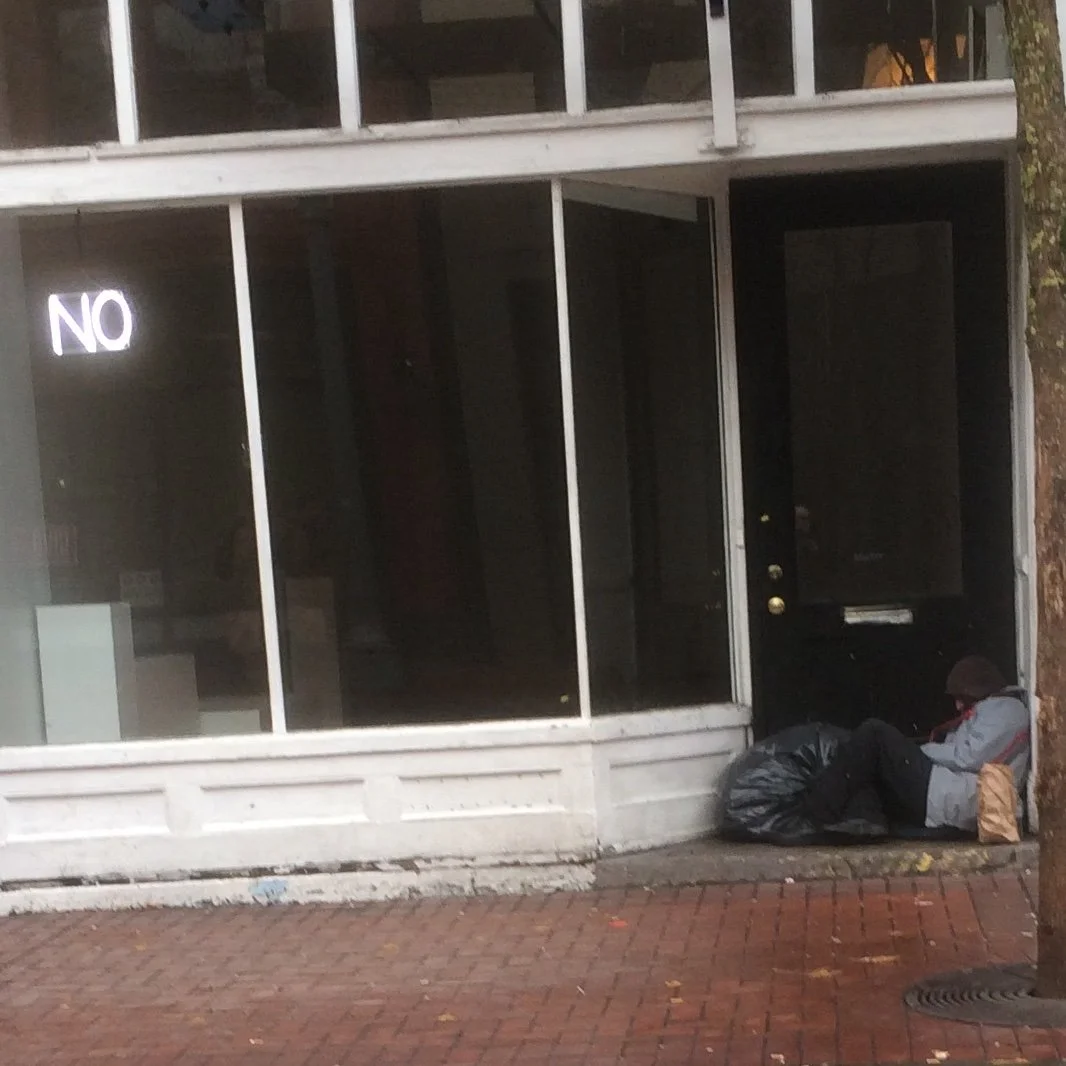
Say me a poem
When my father returned home to rural Arkansas after becoming the first in his family to go to college, his uncle, a logger who had little opportunity in academic places, asked my father to “say me a poem” because he assumed the college-educated learned to understand and recite poems. In some respects it’s too bad he was mistaken.
So, for my great-uncle, I’m saying you a poem….
Five economic terms you should know
Scarcity. The bar where I am drinking–because I have
money–has more beer than it could give away but
it won’t, even to the homeless guy who is standing
by me, because how could you make money that way,
so I myself give him a twenty for the five dollar cover
and tell him to buy a beer with the rest.
Supply and demand. This bar has 64 taps because
they figure that’s how many taps can make them
the most money. Statistically, the homeless don’t count.
Opportunity cost. Maximizing his gain, the homeless
guy buys nachos, then asks the prettiest woman in
the bar for a dance. For one song he’s as rich as the rich,
taking the silk smell of her blouse with him.
Time value of money. I could have made more if I
would have invested that twenty in the stock market.
Purchasing power. He re-attaches all his fanny packs
and coats and leaves, somewhere. I go home after
the second set, glasses are washed and put away and
the bar closes and locks are locked. Warm houses
receive back their owners and a little change from
my twenty jingles away on a skateboard, the remains
of my investment, somewhere out there
into the night and cold, the cold.

Click on the busted hammer to see some links to some of my poems that have found homes somewhere.
What I like about someone else’s poem:
Glass
by Kim Addonizio
In every bar there’s someone sitting alone and absolutely absorbed
by whatever he’s seeing in the glass in front of him,
a glass that looks ordinary, with something clear or dark
inside it, something partially drunk but never completely gone.
Everything’s there: all the plans that came to nothing,
the stupid love affairs, and the terrifying ones, the ones where actual happiness
opened like a hole beneath his feet and he fell in, then lay helpless
while the dirt rained down a little at a time to bury him.
And his friends are there, cracking open six-packs, raising the bottles,
the click of their meeting like the sound of a pool cue
nicking a ball, the wrong ball, that now edges, black and shining,
toward the waiting pocket. But it stops short, and at the bar the lone drinker
signals for another. Now the relatives are floating up
with their failures, with cancer, with plateloads of guilt
and a little laughter, too, and even beauty—some afternoon from childhood,
a lake, a ball game, a book of stories, a few flurries of snow
that thicken and gradually cover the earth until the whole
world’s gone white and quiet, until there’s hardly a world
at all, no traffic, no money or butchery or sex,
just a blessed peace that seems final but isn’t. And finally
the glass that contains and spills this stuff continually
while the drinker hunches before it, while the bartender gathers
up empties, gives back the drinker’s own face. Who knows what it looks like;
who cares whether or not it was young once, or ever lovely,
who gives a shit about some drunk rising to stagger toward
the bathroom, some man or woman or even lost
angel who recklessly threw it all over—heaven, the ether,
the celestial works—and said, Fuck it, I want to be human?
Who believes in angels, anyway? Who has time for anything
but their own pleasures and sorrows, for the few good people
they’ve managed to gather around them against the uncertainty,
against afternoons of sitting alone in some bar
with a name like the Embers or the Ninth Inning or the Wishing Well?
Forget that loser. Just tell me who’s buying, who’s paying;
Christ but I’m thirsty, and I want to tell you something,
come close I want to whisper it, to pour
the words burning into you, the same words for each one of you,
listen, it’s simple, I’m saying it now, while I’m still sober,
while I’m not about to weep bitterly into my own glass,
while you’re still here—don’t go yet, stay, stay,
give me your shoulder to lean against, steady me, don’t let me drop,
I’m so in love with you I can’t stand up.
“Glass” by Kim Addonizio, Tell Me, BOA Editions Ltd.
This is one of my favorite poems ever. But why? How does this poem distinguish itself from the bazillions of other poems out there and grab me by the stanza? What’s in here?
For one thing, I think the delivery is sublime. This poem is offered in the most straightforward way with no pretense and no previous understanding of the situation necessary. Of course, like most great poems this one comes to us—at us—in deep waves so it’s worth it to keep going back to discover more ways the poet tries to drown us with her message.
But it doesn’t need an instruction book. This poem is about loneliness, abject loneliness, and we don’t need an interpreter for that. We already know this language. We all know this language. It’s every language. This is nothing more than the script of all of our lives and Addonizio displays it to us with perfect words and phrases.
We know about loneliness ourselves but we forget, and the poet is not going to let us get away with it; she’s going to deliver this message in a way we cannot escape.
Consider the line “Now the relatives are floating up with their failures, with cancer, with plateloads of guilt and a little laughter, too…” Raise your hand if this doesn’t apply to you. That’s what I thought.
So great.

Clicking on a pepper will lead you to my books. Of course, you don’t have to if you don’t want to.
Accounting for poets
ac·count·ing
/əˈkoun(t)iNG/
noun
the action or process of keeping financial accounts.
"an investigation into suspected false accounting"
for poets: taking account of oneself, looking for contexts that place you where you really are.
If you need help with the accounting needs of a poet, look no further. I’m here to help. How do we account for ourselves in this world, how do we search for the context in which we really reside? My theory is that the intersection of the futile interest in trying to answer that question and the inevitable attempts we make to answer it anyway, well, there is poetry. What that means is that we’re probably all poets because I’ve never met anyone who didn’t try to tackle that question and all the possible answers. So maybe sitting on our front porch in the dark early morning trying to think about nothing, or scribbling some crazy love thought down on the back of a cocktail napkin after a few beers, maybe we get the poet’s badge for that.
Congratulations.
P.S. If you thought I was going to give you tax advice, sorry.

Two Billion Dollar Ideas I’ve had I know you’re going to think are dumb.
Click on the homeless person.